

SPAB Chair, Duncan McCallum draws on our extensive archive to reflect on our critical role in town planning reform. This piece originally appeared in the SPAB members' Magazine in Summer 2026. Become a member to get the next issue.
On 25 December 1939, when the nation was sitting down to its first Christmas lunch of the Second World War, the renowned urban planner and academic, Thomas Sharp, was in his study writing a ‘prefatory note’ to his highly influential book Town Planning. He noted that “we shall…be faced at the end of the war with the necessity of undertaking a vast amount of reconstruction and development in town and country. In spite of all the misery we shall have gone through – largely, indeed, because of it – there will be a great eagerness, when peace comes again, to make a beginning towards a new and better way of life.”
New legislation
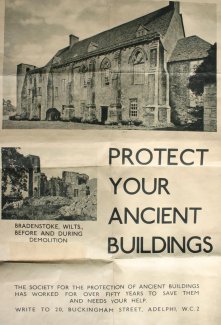
The efforts of Sharp, and many other similarly motivated experts and politicians, resulted in a swathe of reforming legislation, which included new and greatly strengthened provisions that better protected heritage. These included the Town and Country Planning Acts of 1944, which introduced the listing of buildings of special architectural or historic interest, and of 1947 which strengthened those provisions and included the need for planning permission for development.
This legislative shake-up was the opportunity we had been seeking to put national protection for historic buildings on a par with that already existing for ancient monuments. We were acutely aware that while the legislative protection of archaeological sites had started in 1882 with the Ancient Monuments Protection Act, with further strengthening in 1913 introducing a national system of scheduling, national protection for inhabited historic buildings lagged way behind.
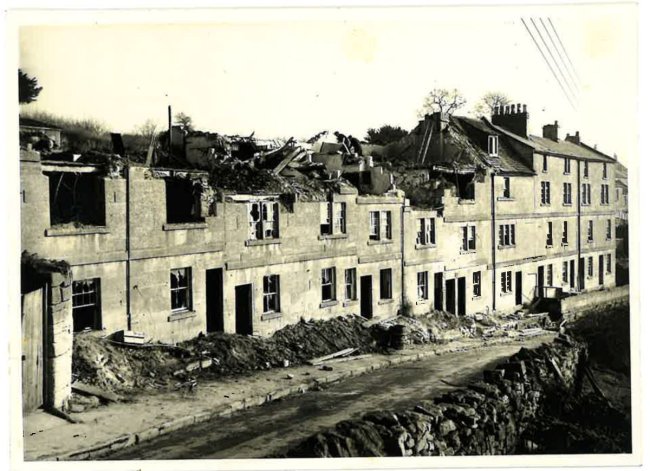
Numerous additional improvements to historic building protection followed in the post-war years through further planning legislation, regulation and national guidance. For example, from 1962, we were notified by central government of buildings facing total demolition and local planning authorities were allowed to grant aid historic building repairs. Another leap forward came in 1967, with the arrival of powers for local planning authorities to designate Conservation Areas. From 1972 it became a requirement for those authorities to notify us, and other national amenity societies, about applications for alterations involving complete or partial demolition of listed buildings. In 2025, we reviewed over 4,000 pieces of planning casework across the UK. Those responses provide vital guides to local planning staff about the impact of proposed changes to listed buildings.
Our evolving role
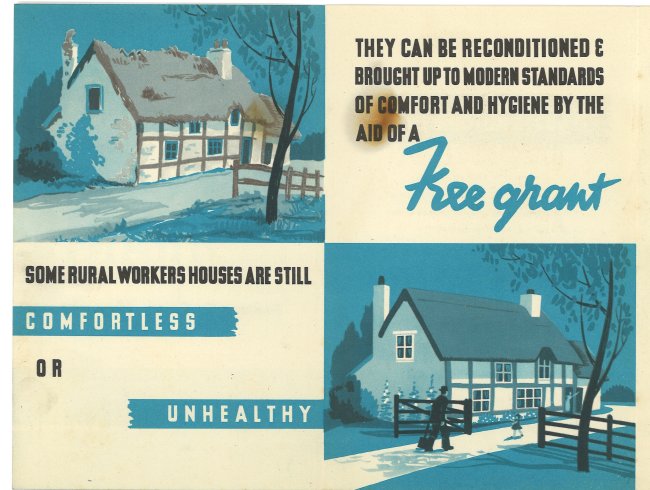
So how did we move from commenting on a few dozen cases in our early years to looking at thousands of changes today? It is a story of evolution, and of lobbying to formalise and ‘lock in’ protection. In the decades following our foundation, the nature of our activities, and our influence in protecting heritage, had expanded rapidly. Initially, we focused on campaigning for the retention of important individual historic buildings that were threatened, but had realised early on that while powerful letters to The Times and other newspapers might catch public attention, it was also vital to bring about lasting change through lobbying and by influencing legislation. We gradually expanded our focus to address threats beyond those to single buildings to address the loss of groups of historic buildings, valued street-scenes and the settings of towns and settlements. From the 1920s, we fought to remedy threats to heritage brought about by the rapid growth of new roads, the demolition of historic bridges, slum clearance and well-intentioned but poorly focused Town Planning Schemes.
We also recognised that accurate and carefully collated data were essential to understand the importance of historic buildings and structures, and the threats these were facing. As early as 1894, member C. R. Ashbee had set up a group of volunteers to systematically identify, investigate and protect London’s most historic buildings; the ‘Committee for the Survey of the Memorials of Greater London’, with the first volume covering Bromley-by-Bow being published in 1900. This work had significant support from us but inclusion of buildings in the published survey volumes did not bring them any statutory protection. A comprehensive inventory of ancient bridges was started in the late 1920s on our behalf by E. Jervoise.
In relation to early planning legislation, the Housing and Town Planning Act of 1909 had introduced Town Planning Schemes and provisions for heritage were improved in 1932, but these were optional tools not required activities. The arrival of Slum Clearance Schemes, while bringing about much-needed improvements to housing standards, did not help historic buildings in poor condition in those areas. Our Annual Reports of the 1920s and 1930s identify several areas where some old dwellings were saved by persuading sympathetic landlords to institute repairs, or Council Clerks to modify the proposals, or where money could be raised by public subscription to purchase and repair buildings, but these were very much the exception.
The 1927 Annual Report records that “recently the Society has given more and more attention to the preservation of the ancient areas of historic towns” and sought to persuade local authorities to appoint an Ancient Monuments Committee. Our then Chairman, Thackeray Turner said he was “glad to think that our Society works in cordial co-operation with all other movements with analogous aims and likewise with the Government… which has now great and constantly growing responsibilities in the matter of preserving buildings.”
Almost a century on ‘cordial co-operation’ remains, but the need for us to lobby to retain levels of protection previously afforded to heritage is a growing, and worrying, part of our work.