

Gunpowder plotters retreat, Holbeche House, Wall Heath, Dudley
Laura Polglase, Volunteer Buildings at Risk Officer outlines the importance of this Elizabethan Mansion and new plans for this local landmark to become useful addition to the Dudley community.
Readers will remember the case of the Crooked House pub which received national attention when it was bulldozed following an arson attack. Only a few miles away, Holbeche House was sitting unoccupied and boarded up, following the closure of the nursing home there. The local authority, Dudley Metropolitan Authority, were therefore particularly aware of how vulnerable such a site could be to anti-social behaviour. Arson attacks on historic buildings have sadly been a regular feature in the news; from Grade I listed Woolton Hall in Merseyside to The Raven Hotel in Droitwich (see blog: After the Fire)
SPAB has been contacted by members of the local community with concern over the state of Holbeche House. The large site did not have live-in guardians or other proactive security measures and was within easy access of Kingswinford. It appeared to be well boarded up with a security fence around, but such measures can sometimes attract anti-social behaviour rather than deter it. We supported its addition to Historic England’s Heritage at Risk register in 2023 and engaged with the local authority to suggest ways of protecting the site.
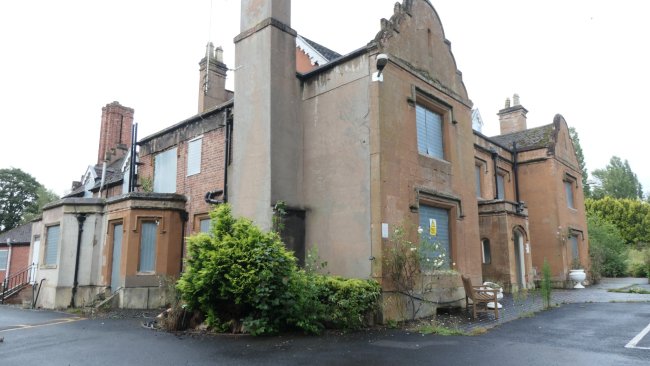
Unlike the Crooked House, which was unlisted, Holbeche House is listed at Grade II*, indicating its national importance as a building of more than special interest. Built for the Littleton family in 1600, it has been substantially altered in the 19th century. It has an imposing but architecturally restrained exterior and some nice original panelling internally. Pevsner noted in passing that it was ‘indeed an early seventeenth century building.’ Historic England dates some of the north-eastern part to the 16th century and the remainder of the house to around 1710. It was refaced in the early 19th century to form the plain classic facades seen today and annexes have been built to the rear since then.
While Pevsner may have been unimpressed by its architectural design, Holbeche House is significant as a building dating from the early 16th century and historically as the site of the last stand of those involved with the Gunpowder Plot. This conspiracy in 1605 saw a group of English Catholics, led by Robert Catesby and infamously including Guy Fawkes, plotting to blow up the House of Lords during the state opening of Parliament by James I on 5 November. An anonymous tip-off led to a search of the site on 4 November and Fawkes was discovered guarding enough explosives to reduce the building to rubble.
Holbeche House was owned by one of their group, Stephen Littleton. Littleton was a prominent member of the Midlands’ Catholics and Holbeche House was said to be ‘the house in the dip that Swinford folk steal to hear the forbidden Mass whenever some courageous priest will risk his life to come there to say it.’
There are reputed to be at least two priest holes, including one in the rear chimney stack, and legend suggests the existence of an underground tunnel linking to another property, although no evidence of this has been uncovered.
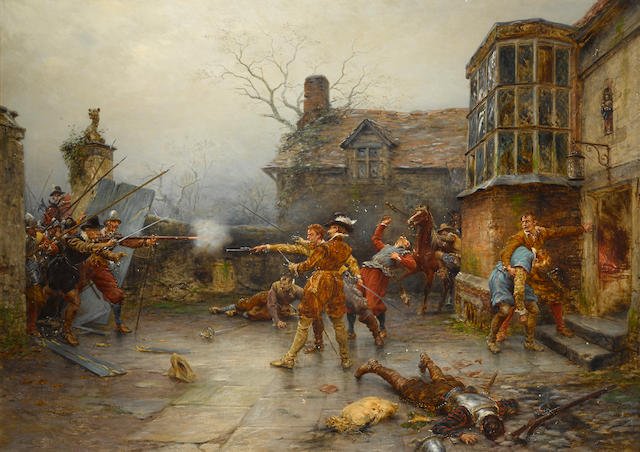
From London, the conspirators had fled north where they eventually found refuge in Holbeche House. Arriving late on the night of 7 November, tired and wet from their journey, they tried to dry out by the open fire. With some degree of irony, the damp gunpowder they had brought with them exploded as it was drying out. Several of the group were badly injured, including Robert Catesby.
The following day, Holbeche was surrounded by a 200 strong militia, led by Richard Walsh, the Sheriff of Worcestershire. Most of the plotters were killed during the fighting, including Catesby. Musket holes can be seen in the front door which dates from that time and is still in situ; there are also holes in walls on the front elevation which are alleged to be from musket balls. Some of the men escaped, including the owner of the house, Stephen Littleton, who was subsequently captured and executed for treason in Stafford in 1606.
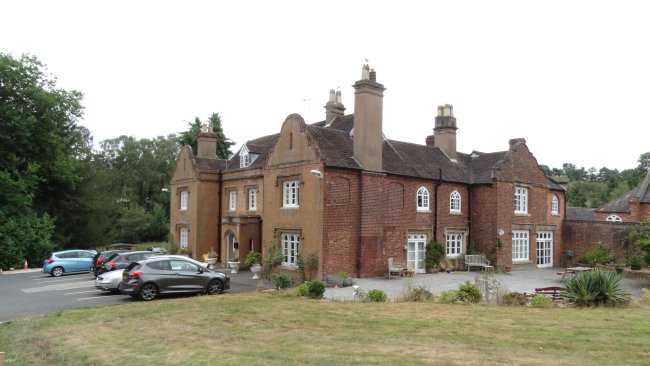
This year, the owners of Holbeche House applied for Listed Building Consent to change the main house into office space and the 19th and 20th century annexes back into nursing and social care facilities. SPAB welcome this proposal along with the other Amenity Societies and Historic England. The best protection for a historic building is to be occupied and used and we look forward to seeing Holbeche back once again as a landmark and a useful addition to the community.