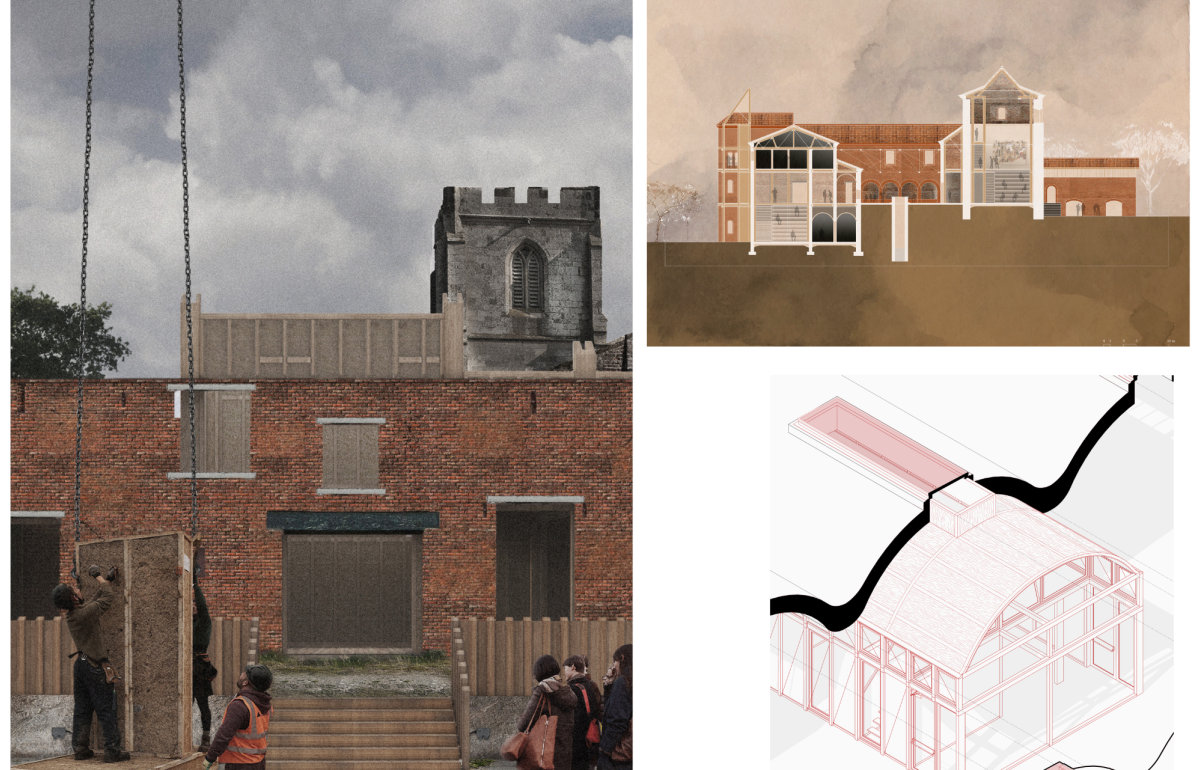
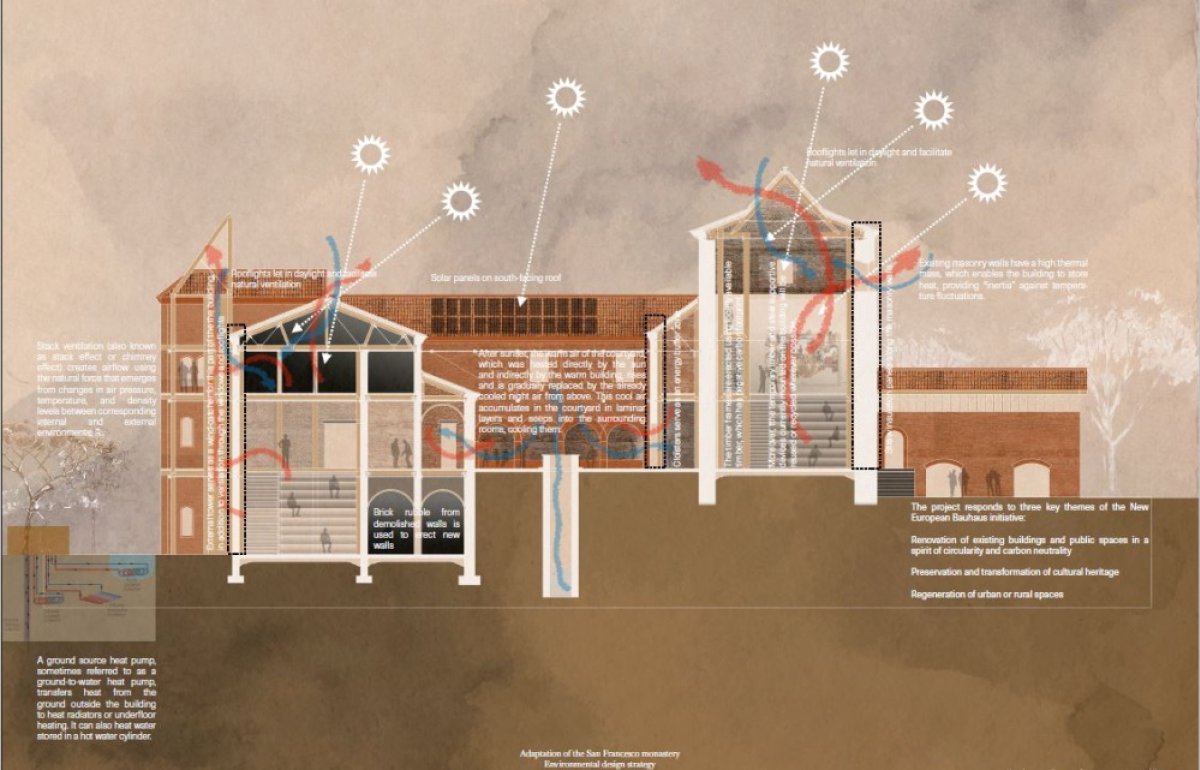
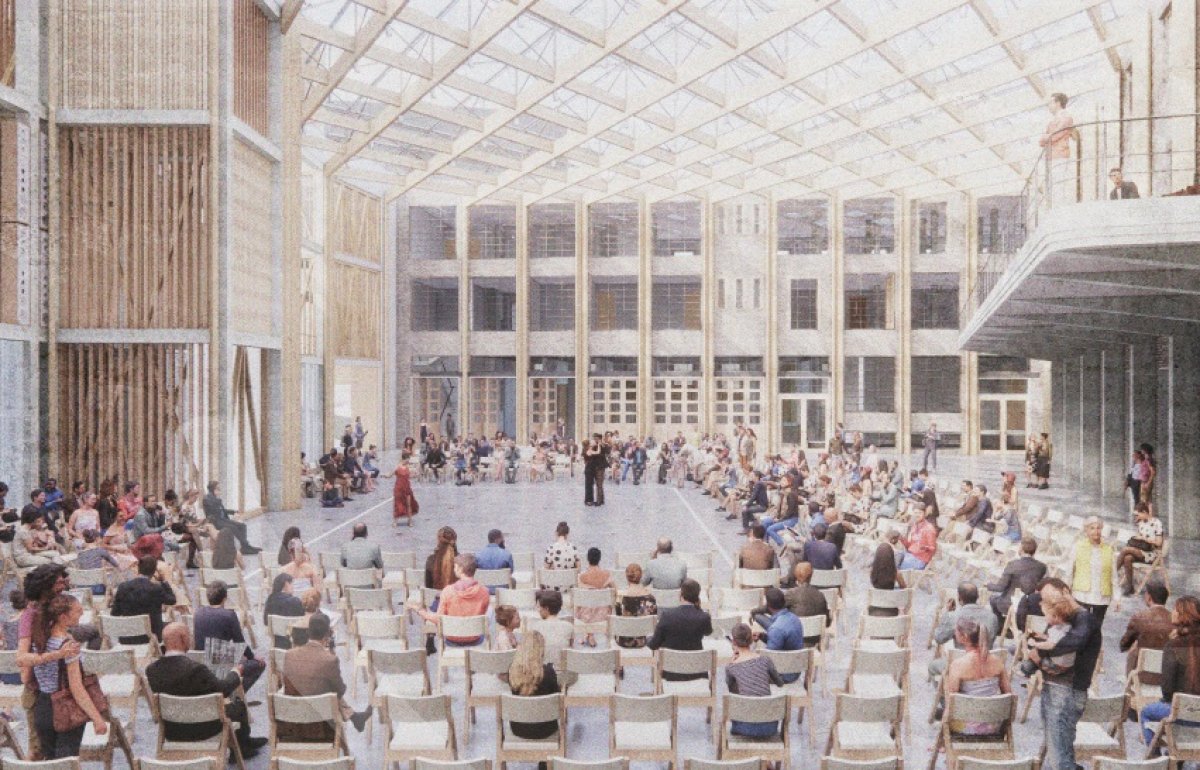
The winning scheme was Michał Saniewski’s project for Falerone, a medieval Italian town damaged by a series of tragic seismic shakes in 2016. Adapting abandoned buildings into a craft school is an opportunity to revive traditional local skills, and for sharing knowledge of earthquake-resistant construction. Also shortlisted were George Williams and Joseph Richard Cox’s project which celebrates the farmstead as symbol of rural continuity and Harry Sale's scheme to give a new, circular purpose to the empty ceramics Spode Factory in Stoke-on-Trent.
Philip Webb Award

Philip Webb Award
The Philip Webb Award is a design competition that encourages the sympathetic reuse of existing buildings, and champions sensitive new design for old buildings. It is open to Architecture students and recent graduates.
It is named in honour of architect Philip Webb who co-founded the SPAB in 1877 and was instrumental in the development of the building conservation movement.
Submit your entries or nominations by Wednesday 14 August 2024. You can find out more below, or get inspired by our previous shortlist and winners. Any questions? Email awards@spab.org.uk.
The brief
Architecture students and recent graduates are invited to devise a scheme which sympathetically brings an old building back into use. The scheme should incorporate both careful repair of historic fabric and a significant element of new construction in a contemporary design.
What are we looking for?
- A sensitive historical and architectural appraisal of the existing building(s) through research, investigation and measured drawings
- A clear presentation and reasoned explanation of the steps to be taken to conserve and repair existing fabric, demonstrating understanding of repair techniques and materials
- A convincing statement of the design approach taken to the contemporary interventions proposed to enable the building’s reuse
- A clear illustration of how the relationship between the old and the new is managed
- Evidence showing how the scheme responds to the SPAB Approach
- High standards of presentation in drawings and written material
Who can enter?
The Philip Webb Award is open to:
- Students currently completing RIBA Part II (or an equivalent Architecture qualification) or those who completed their studies in 2022 or 2023
- Students or graduates must be from Schools of Architecture in the UK or Republic of Ireland
How to enter
Please enter via the online form. You need to include:
- A completed entry form
- A maximum 400-word ‘executive summary’ outlining your aims and approach, and the scheme’s key points
- A report setting out how the details of the scheme, meeting the criteria above, including a location plan, survey drawings, photos and contextual information and drawings illustrating the scheme
- Please do not include your name (or anything that could identify you) on your file attachments as entries are judged anonymously.
All Awards are free to enter. Shortlisted entries for the Philip Webb Award will receive one complimentary ticket to the Awards Ceremony.
Any questions? Email awards@spab.org.uk.
Past Winners
2022 winner
2020 winner
First prize went to Jess Tyson of Nottingham University for her scheme to create a new Nottingham Arts Centre from a complex of buildings including the city's former Guildhall and Fire Station. A team from Birmingham City University took second prize with their proposal to refurbish and extend Moseley Road Baths, Birmingham, continuing its use for public swimming but adding a range of other community facilities. The judges commended Justin Chung of Manchester School of Architecture who re-imagined the former Dana Prison, Shrewsbury as a centre for artisan crafts.
2019 winner
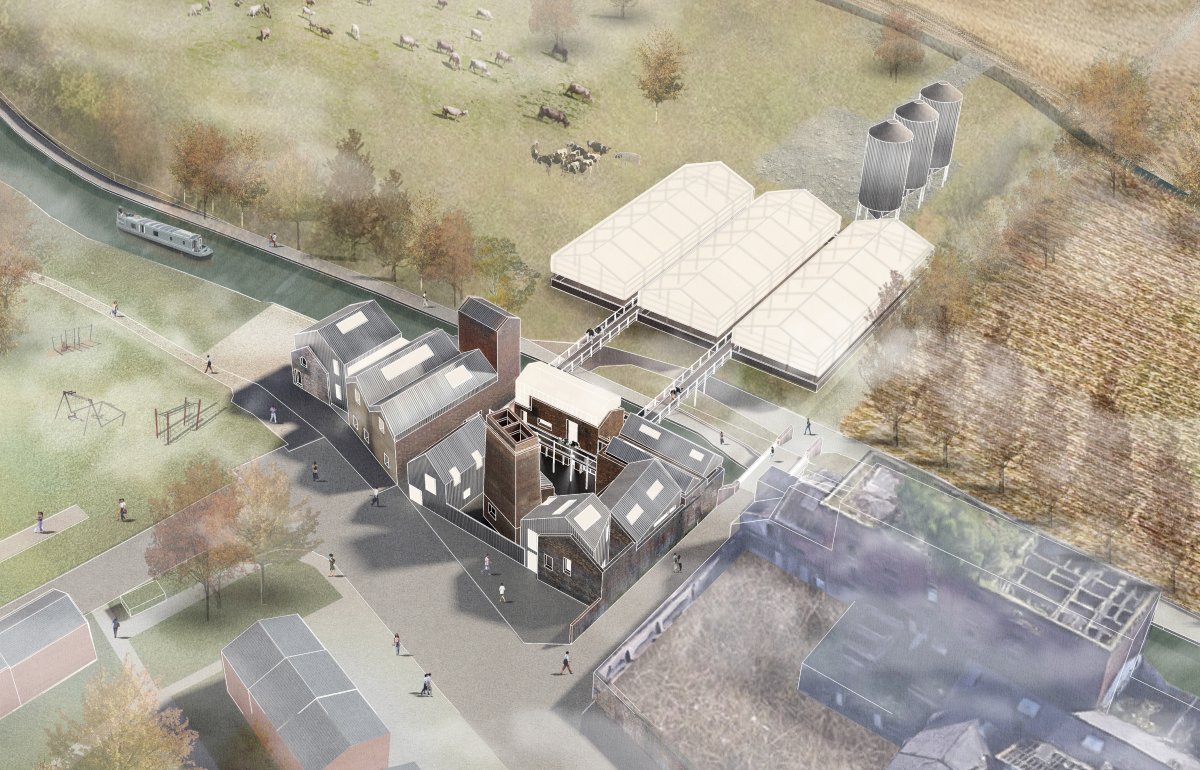
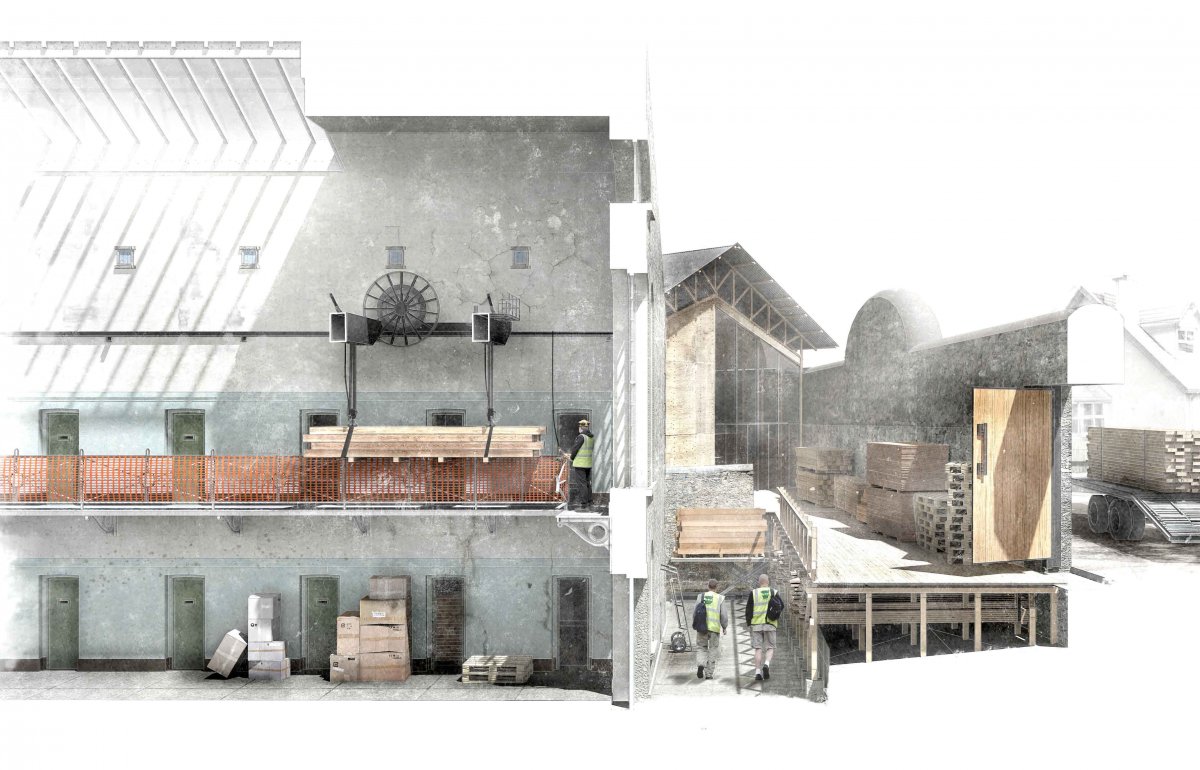
Joint first prize went to two schemes which reintroduce semi-industrial uses to former manufactories, seeing the possibilities presented by challenging sites in an advanced state of dereliction. Taking inspiration from pottery techniques, Olivia Hellman (Sheffield) inserted an urban dairy in a former calcining mill at...
2018 winner
The winning and commended architects in 2018 chose to develop schemes for buildings or complexes with an uncertain future or which are currently subject to unsympathetic planning proposals. This year’s first prize winner, Chris Hamill, tackled the contested site of disused Armagh Gaol. Second prize went to Rachael Moon for her imaginative proposal to transform the Pit Head Baths at Chatterley Whitfield Colliery in Stoke-on-Trent, into a public spa. Joe Copp was commended for his scheme to revive the Bristol United Brewery Malt House.

2017 winner
First prize went to Marta Ascenso of the Mackintosh School of Architecture (Glasgow School of Art) for her scheme to breathe new life into the abandoned Italian hill town of Craco in Basilicata. Alanah Honey, a graduate of Newcastle University, took second prize for her proposal to refurbish and extend redundant buildings in Zanzibar to house a new Institute of Design. The judges awarded third prize to Kate Nicholson of Sheffield University who re-imagined part of the former Spode Pottery in Stoke on Trent as a storytelling centre.