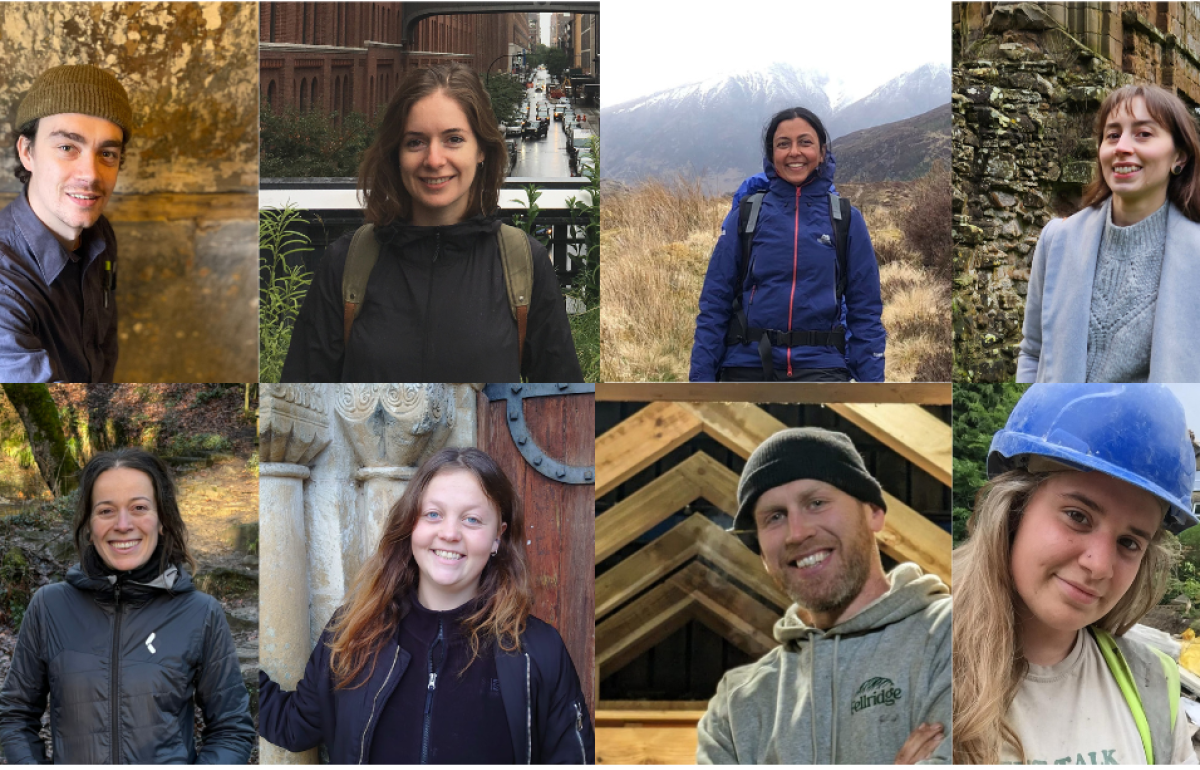
Our 2024 Fellows are:
- James Bull, carpenter and millwright
- Ellie-Jae Dobson, bricklayer
- Jim Brearley-Ratcliffe, carpenter
- Marlène ‘Marly’ Lagnado, stonemason

“The Fellowship has been an amazing experience... meeting some of the most skilled and inspiring craftspeople. It has ignited interests and passions that I have never thought of before, which I will continue to explore and further my development long after the Fellowship is finished.”
Toby Slater, carpenter and 2021 Millwright Fellow
The Fellowship is a training programme designed to broaden the skills and experience of craftspeople involved in historic building repairs.
Fellows develop their own skills and approach to repair, and learn about other traditional craft techniques through site visits guided by experienced conservation professionals.
It is a full-time programme, from mid-March to mid-December 2024, running in three blocks, with roughly two months on, two months off.
We recruit three or four Fellows each year, including one Millwright Fellow, whose programme runs continuously.
Applications for 2024 are now closed. Subscribe to our eNewsletter to hear when applications open next year, as well as other ways you can get involved with the SPAB.
The programme is divided into three blocks of two months, enabling Fellows to return to work in between blocks.
In the first two blocks, Fellows travel around the country together, learning about traditional materials, skills and repair techniques through workshops and site visits.
The third block consists of longer hands-on placements, tailored to each Fellow’s individual interests and training needs.
The Millwright Fellowship runs continuously for nine months, with millwright training placements between blocks, while other Fellows are back at work.
The programme covers a wide variety of craft skills, including timber framing, lime plastering, thatching, blacksmithing, pargeting, flint knapping, stained glass, stonemasonry, bricklaying, slating and tiling.
Fellows will sometimes travel with the SPAB Scholars (architects, surveyors and structural engineers), sharing knowledge, working together, developing their philosophy of repair and learning about each other's professions - bridging the gap commonly faced in the workplace.
This is a full-time, intensive programme, including some weekend work, so cannot be combined with other work or study.
Instead of formal submissions, Fellows keep a notebook throughout the programme, recording visits and repair methods through writing and sketching.
They also report on their progress to the SPAB team at various points throughout the programme, and share updates for the SPAB’s communications channels.
The SPAB Fellowship is run by Fellowship Officer Pip Soodeen and overseen by the SPAB’s Education and Training Committee. Fellows are also assigned a SPAB Fellowship mentor (usually a past Fellow).
There are no course fees for the SPAB Fellowship.
Fellows each receive a £7,000 bursary to cover basic travel and livings costs during the programme.
The Millwright Fellow receives a further £3,750 bursary to cover additional travel and living costs during the millwrighting training placements.
Supplementary finance of around £5,000 is usually required.
CITB grant funding may also be available for employers registered with CITB at least 12 months prior to the Fellowship programme commencing.
Three or four Fellowships are awarded each year.
The SPAB recruits Fellows on merit and is committed to eliminating discrimination and encouraging diversity in the sector. We particularly welcome applications by people from backgrounds under-represented in building conservation (such as those from disadvantaged socio-economic background, women and black and minority ethnic communities).
Please note that the offer of a SPAB Fellowship is subject to the applicant providing evidence of their right to live and work in the UK. The SPAB is not a registered sponsor body for the purpose of visa applications. Applicants from outside the UK and Ireland should check their eligibility for a UK visa before applying to the scheme. Please check the UK government website for more information.
You can find out more about our past and current Fellows on our blog.
Applications for 2024 are now closed.
Subscribe to our e-newsletter to hear when applications open next year, as well as other ways you can get involved with the SPAB.
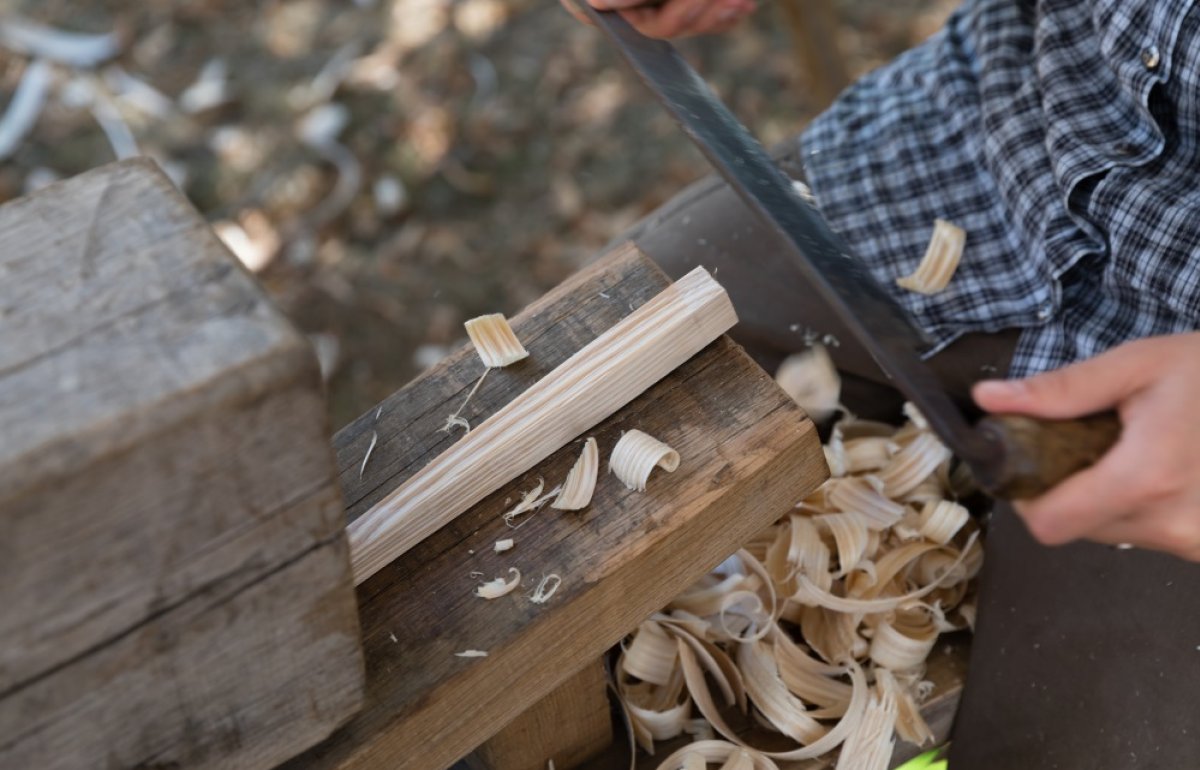
Our 2024 Fellows are:

The SPAB is grateful to all donors and sponsors who support the Fellowship programme and make it possible for us to continue offering this unique, hands-on learning experience. The Fellowship was founded to ensure the continuation of building craft skills and with the important aim of training the next generation of craftspeople to look after old buildings. Please consider supporting the Fellowship.
We are grateful to the supporters that make the Fellowship programme possible: The Ashley Family Foundation, Carpenters' Company Charitable Trust, DBR Ltd, Francis Coales Charitable Foundation, Historic England, Historic Environment Scotland, Stuart Heath Charitable Settlement, The William Morris Craft Fellowship Trust, Owlsworth IJP, Anonymous; as well as the many hosts who give their time, energy, expertise and hospitality to make the Fellowship possible.